Last checked: November 27, 2026.
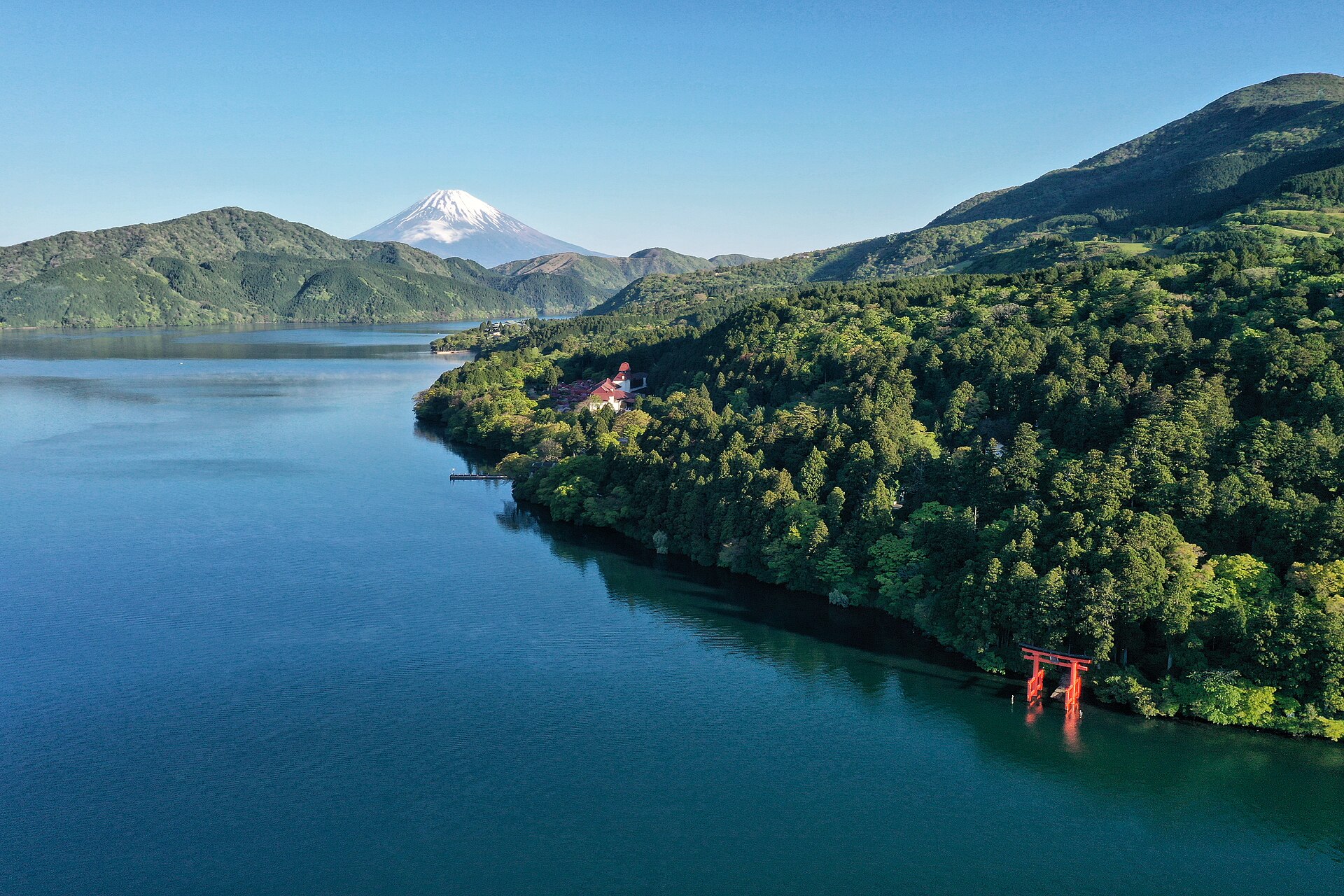
Hakone (箱根) is a mountain resort area built around Mt Hakone (Hakone-yama), an active volcano. It is famous for hot springs, the steaming volcanic valley of Owakudani, Lake Ashi with its pirate ships and shrine gate in the water, and views toward Mt Fuji. From Shinjuku in Tokyo, the Odakyu Romancecar reaches Hakone-Yumoto in about 80 minutes, so Hakone works as a day trip or an overnight stay.
Most first-time visitors buy the Hakone Freepass and ride a classic one-way loop: mountain train, cable car, Ropeway over Owakudani, then a pirate ship across Lake Ashi. This Hakone Japan guide explains how to plan that trip, what it costs in 2026, and what is different this winter, when parts of the Ropeway close for maintenance.
Hakone at a glance
- Gateway stations: Odawara and Hakone-Yumoto.
- Fastest train from Tokyo: Odakyu Romancecar, Shinjuku to Hakone-Yumoto, approx. 80 minutes.
- Main pass: Hakone Freepass, 2-day 7,100 yen or 3-day 7,500 yen for adults from Shinjuku.
- Volcano status: Volcanic Alert Level 1 (lowest level) on 27 November 2026, according to the Japan Meteorological Agency.
- Big changes: fares rose on 1 October 2025, and Ropeway sections close from 7 December 2026 to 26 February 2027 (replacement buses run).
If you want background on how Hakone developed as a hot spring and travel destination, read our article about the history of Hakone, its natural beauty, hot springs and tourist attractions.
Getting to Hakone from Tokyo
Odakyu Romancecar (easiest option)
The Odakyu Limited Express Romancecar runs from Shinjuku to Hakone-Yumoto in approx. 80 minutes. All seats are reserved, and the trains have reclining seats, restrooms and luggage space.
You need two tickets: a limited express ticket and a regular fare ticket. The Hakone Freepass counts as the regular fare ticket, but it does not include the limited express fee.
| Romancecar limited express fee (one way) | Adult | Child |
|---|---|---|
| Shinjuku to Hakone-Yumoto | 1,200 yen | 600 yen |
| Shinjuku to Odawara | 1,000 yen | Not listed |
Example from Odakyu: 1,200 yen Romancecar fee plus a 7,100 yen 2-day Freepass = 8,300 yen for an adult. Limited express e-tickets bought through EMot Online Tickets are 50 yen cheaper. Children aged 6 to 11 pay half the adult fare; children under 6 need a ticket only if they take their own seat.
Shinkansen to Odawara
If you have a JR pass or are coming from western Japan, you can take the JR Tokaido Shinkansen to Odawara and start your Hakone trip there. We could not confirm the current Tokyo to Odawara travel time and fare, so check JR’s official information. One useful point: the Freepass bought in Odawara costs 6,000 yen for a 2-day pass, which is cheaper than the Shinjuku version because it does not include the Odakyu ride from Tokyo.
Highway bus
Odakyu Highway Buses run from Shinjuku toward the Hakone and Gotemba area. With a Freepass bought in Shinjuku, the Shinjuku to Gotemba highway bus costs 1,400 yen one way instead of the normal 2,000 yen. We could not confirm fares and journey times for the Shinjuku to Hakone highway bus, so check before you go.
For a full comparison of train, bus and car options, see our guide Tokyo to Hakone: Romancecar, Shinkansen, Bus or Car?
Hakone’s main areas, in the order you meet them
The easiest way to understand Hakone is to follow the transport line from the bottom of the mountain up to Lake Ashi.
- Odawara: the main gateway, where the Shinkansen and Odakyu lines meet the Hakone Tozan Railway.
- Hakone-Yumoto: the end of the Romancecar line and the start of the mountain railway. A common first stop and hot spring town.
- Gora: the top of the Hakone Tozan Railway and the start of the cable car.
- Sounzan: the top of the cable car and the first Ropeway station.
- Owakudani (大涌谷): the volcanic valley with steam vents, formed by an eruption of Mt Hakone more than 3,000 years ago.
- Ubako and Togendai: Ropeway stations on the way down to Lake Ashi. Togendai is a pirate ship port.
- Lake Ashi (Ashinoko): with ports at Togendai, Hakone-machi and Moto-Hakone. Hakone Shrine and the Hakone Checkpoint are near the southern end.
- Sengokuhara: known for its pampas grass fields in autumn.
The classic Hakone loop
This one-way route is the core of most first visits. Every leg is covered by the Hakone Freepass.
- Hakone Tozan Railway, Hakone-Yumoto to Gora (about 40 minutes, 8.9 km). The line opened in 1919 and climbs gradients of up to 80 permil, the steepest of any adhesion railway (trains that grip the rails without racks or cables). The train reverses direction at 3 switchbacks, and the driver and conductor swap ends each time.
- Hakone Tozan Cable Car, Gora to Sounzan.
- Hakone Ropeway, Sounzan to Owakudani to Ubako to Togendai (about 10 minutes per section). Gondolas run about every minute and carry 18 people. Between Sounzan and Owakudani you cross a valley about 130 m above the ground. Mt Fuji and Lake Ashi can be seen on the way toward Togendai.
- Hakone Sightseeing Cruise (pirate ship), Togendai to Moto-Hakone or Hakone-machi (about 25 to 40 minutes).
From Lake Ashi, you return toward Hakone-Yumoto or Odawara by bus (Hakone Tozan Bus designated sections are covered by the Freepass). For ideas on what to see at each stop, see 25 best things to do in Hakone, by area.
Transport passes: the Hakone Freepass and alternatives
Hakone Freepass prices (from 1 October 2025, still current)
| Where you start | 2-day adult | 2-day child | 3-day adult | 3-day child |
|---|---|---|---|---|
| Shinjuku or Yoyogi-Uehara | 7,100 yen | 1,600 yen | 7,500 yen | 1,850 yen |
| Machida | 6,820 yen | 1,600 yen | 7,220 yen | 1,850 yen |
| Fujisawa | 7,050 yen | Check official site | 7,450 yen | Check official site |
| Odawara, Hakone-Yumoto, Gotemba or Mishima | 6,000 yen | 1,500 yen | 6,400 yen | 1,750 yen |
Prices went up by 1,000 yen in October 2025 (the Shinjuku 2-day pass was 6,100 yen before). Older guides and blogs may still show the old prices.
What the Freepass covers
Unlimited rides on 8 kinds of transport:
- Hakone Tozan Line (train)
- Hakone Tozan Bus (designated sections)
- Hakone Tozan Cable Car
- Hakone Ropeway
- Hakone Sightseeing Cruise (pirate ships)
- Odakyu Highway Bus (designated sections)
- Tokai Bus (designated sections)
- The sightseeing facilities loop bus
It also includes one round trip on the Odakyu Line between your starting station and Odawara (you can stop off along the way), plus discounts at about 70 tourist facilities.
Not covered: the Romancecar limited express fee, Izuhakone Bus (伊豆箱根バス) and scheduled sightseeing tour buses.
Where to buy
You can buy the Freepass from one month before travel in the EMot app or on EMot Online Tickets, at Odakyu stations, at 7-Eleven (Seven Ticket), from some travel agents, and at stations around Hakone. Ticket machines only sell passes that start on the same day. If a service is suspended because of bad weather and you never rode it, you can ask for a refund for that service at the station where your trip ends.
For step-by-step details, see our Hakone Freepass 2026 guide.
Other passes
| Pass | Covers | Adult | Child |
|---|---|---|---|
| Hakone Freepass “Hako Ticket” Plus | Digital Freepass with entry to selected facilities | From 12,000 yen | From 4,000 yen |
| Pirate ship and Ropeway unlimited pass | Pirate ships and Ropeway | From 5,000 yen | From 1,400 yen |
| Owakudani Kippu | Tozan train, cable car and Ropeway | From 5,000 yen | From 1,300 yen |
| Nonbiri Kippu (1-day) | Hakone Tozan train, Odawara to Gora | 1,580 yen | 500 yen |
Is the Freepass worth it?
Usually yes if you do the full loop. At regular adult fares, the loop from Odawara costs 4,900 yen one way (Tozan train 770 + cable car 430 + Ropeway 2,000 + pirate ship 1,700), and that does not include the bus back. The Odawara Freepass is 6,000 yen for 2 days and also covers that return bus and other rides. If you start in Shinjuku, the pass also covers your Odakyu round trip to Odawara.
Single fares (adult / child)
| Route | Adult | Child |
|---|---|---|
| Tozan train: Odawara to Hakone-Yumoto | 360 yen | 180 yen |
| Tozan train: Hakone-Yumoto to Gora | 460 yen | 230 yen |
| Tozan train: Odawara to Gora | 770 yen | 390 yen |
| Cable car: Gora to Sounzan | 430 yen | 220 yen |
| Ropeway: any section, one way (valid 1 day) | 2,000 yen | 700 yen |
| Ropeway: round trip (valid 2 days) | 3,000 yen | 1,000 yen |
| Pirate ship: Togendai to Moto-Hakone or Hakone-machi | 1,700 yen | 850 yen |
| Pirate ship: Hakone-machi to Moto-Hakone | 600 yen | 300 yen |
| Pirate ship: round trip | 3,000 yen | 1,300 yen |
Ropeway tickets bought at the station are valid on the day of purchase only, but you can stop off along the way. Pirate ship tickets are valid on the day of purchase only, and a one-way ticket does not allow stopovers.
Winter 2026-27: Ropeway closures and shorter hours
The Hakone Ropeway normally runs 9:00 to 17:00 from February to November and 9:00 to 16:15 in December and January. In winter, start the loop early.
Two sections will close for maintenance:
| Closed section | Dates | Replacement bus |
|---|---|---|
| Owakudani to Sounzan | 7 December to 24 December 2026 | About 10 minutes one way |
| Togendai to Ubako to Owakudani | 12 January to 26 February 2027 | About 15 minutes one way |
- Replacement buses leave about every 15 minutes and follow Ropeway hours.
- The Freepass and other valid Ropeway tickets can be used on them. Without a Ropeway ticket, use regular Izuhakone Bus routes.
- The operator warns that the buses will be very crowded and roads congested, and recommends using the sections that are running normally.
- Doing the loop in reverse, or reaching Lake Ashi by bus, can help you avoid the busiest stretches.
The Ropeway posted another notice on 24 November 2026, so check the official Ropeway page before you travel. Also note that the Ropeway may stop in strong wind, lightning or when a typhoon approaches, and strong wind can also stop the pirate ships. Live service status is on Hakone Navi’s transport page.
Top sights for first-time visitors
- Owakudani: the volcanic valley at the heart of the Ropeway route. Owakudani station has toilets, an elevator, an AED, coin lockers, a currency exchange machine, a first-aid room, a shop and the new OWAKUDANI KITCHEN restaurant, which serves dishes such as Owakudani curry.
- Hakone Shrine: founded in 757 AD, famous for its “Torii of Peace” standing in Lake Ashi.
- Lake Ashi pirate ships: a renewed ship, “Royal II”, has entered service.
- Hakone Checkpoint: a restored Edo-period checkpoint on the old Tokaido road.
- Hakone Museum of Art: the oldest museum in Hakone, known for its moss garden and autumn colours.
- Sengokuhara pampas grass fields: a classic autumn sight.
- The Hakone Tozan Railway itself: the switchbacks and steep climb are an attraction. The older 100-series trains are retiring, with commemorative events running; the final date has not been confirmed.
Opening hours and admission prices for museums, Hakone Shrine and the Hakone Checkpoint change, so check each official site before you go.
Hot springs (onsen)
Hot springs are one of the main reasons people visit Hakone, and there are several onsen areas spread along the mountain, from Hakone-Yumoto upward. The type of water and atmosphere differ by area, so it is worth choosing an area that fits your plans and your route. Our guide to 5 must-visit hot spring areas in Hakone explains the differences.
You may also see news about new local taxes on hot spring bathing or overnight stays in Hakone. No official rates or start dates have been confirmed, so check Hakone Town’s official announcements if this affects your budget.
Where to stay: choosing an area
Hakone works as a day trip, but staying one night lets you do the loop without rushing and enjoy a hot spring in the evening. When choosing where to stay, think about transport:
- Hakone-Yumoto: the easiest for arrival and departure, since the Romancecar stops here.
- Along the Tozan Railway and around Gora: good if you want to start the cable car and Ropeway early, which matters in winter when the Ropeway closes at 16:15.
- Around Lake Ashi: convenient for Hakone Shrine, the Checkpoint and the pirate ships, but further from the train line.
The 2-day Freepass (7,100 yen from Shinjuku) suits a one-night trip. The 3-day pass costs only 400 yen more if you stay two nights.
When to visit: seasons
- Autumn: Odakyu names Lake Ashi, the Hakone Museum of Art, the Sengokuhara pampas grass fields and the Hakone Ropeway as autumn-foliage spots. This is also a peak season: in November 2026 the Ropeway trialled a paid priority boarding gate, which shows how long the queues can get. Go early in the day.
- Winter: shorter Ropeway hours (9:00 to 16:15 in December and January) and the maintenance closures listed above. On 2 and 3 January, the Hakone Ekiden relay race causes heavy road congestion around Moto-Hakone and Hakone Shrine. The 2027 traffic arrangements have not been confirmed.
- Spring and summer: seasonal events such as cherry blossoms and the hydrangea season on the Tozan Railway are popular, but exact dates change every year. Check the official sites close to your trip.
In any season, wind can stop the Ropeway and ships, so keep your plans flexible.
Is Hakone safe?
As of 27 November 2026, the Japan Meteorological Agency (JMA) has Hakone-yama at Volcanic Alert Level 1, with the note “Note that this is an active volcano”. The level was last changed on 7 October 2019, when it was lowered from 2 to 1. JMA warns that small eruptions can happen suddenly and that some vents around Owakudani are very active, so watch out for steam and volcanic gas near craters and vents. For more detail, read Is Hakone safe? Volcano alert level, Owakudani access and safety tips.
Useful contacts
- Odakyu Customer Center (Freepass help): 044-299-8200, 9:00 to 17:00, open every day.
- Hakone Town tourist information center: 0460-85-5700.
Frequently asked questions
Can I visit Hakone as a day trip from Tokyo?
Yes. The Romancecar from Shinjuku to Hakone-Yumoto takes approx. 80 minutes, so you can do the classic loop in one day if you start early. In December and January the Ropeway closes at 16:15, which leaves less time.
Does the Hakone Freepass include the Romancecar?
No. The Freepass covers the regular fare, but you must pay the Romancecar limited express fee separately: 1,200 yen for adults from Shinjuku to Hakone-Yumoto. A 2-day Freepass plus a one-way Romancecar costs about 8,300 yen.
Is the Hakone Ropeway open in winter 2026-27?
Partly. Owakudani to Sounzan is closed from 7 to 24 December 2026, and Togendai to Ubako to Owakudani is closed from 12 January to 26 February 2027. Replacement buses run, and the Freepass is valid on them.
Where can I see Mt Fuji in Hakone?
The Hakone Ropeway is one of the best places: Mt Fuji and Lake Ashi can be seen on the way toward Togendai. Views depend on the weather.
How much did prices go up in 2025?
On 1 October 2025, the Freepass rose by 1,000 yen, the Ropeway one-way fare rose from 1,500 to 2,000 yen, and the Togendai pirate ship fare rose from 1,200 to 1,700 yen.
Is it safe to visit Owakudani?
The alert level is 1, the lowest level, as of 27 November 2026. JMA still asks visitors to watch out for steam and volcanic gas near vents, and to remember that small eruptions can happen suddenly.
Sources
- Odakyu: Hakone Freepass prices and where to buy
- Odakyu (English): Hakone Freepass
- Odakyu (English): Limited Express Romancecar
- Hakone Navi: Hakone Freepass
- Hakone Navi: Ropeway one-way and round-trip tickets
- Hakone Navi: Pirate ship tickets and other passes
- Hakone Navi: Hakone Ropeway
- Hakone Navi: Hakone pirate ships
- Hakone Navi: Hakone Tozan Railway and Cable Car
- Hakone Navi: Owakudani Station
- Ropeway maintenance closure notice, December 2026 and January to February 2027 (PDF)
- Hakone Navi: Ropeway paid priority gate trial
- Japan Meteorological Agency: Volcanic activity at Hakone-yama
- Hakone Tourist Association: Ekiden boats (2024 example)
Featured photo: Lake Ashi & Mt Fuji & Hakone Shrine by Charlie fong, CC BY-SA 4.0, via Wikimedia Commons.